The Truth Calculator / How it works
An answer is a start. See what supports it.
When an AI answer or a claim matters to you, keep the evidence close. See what supports it, what conflicts and what still needs a human second look.
Your evidence. Your device. Your decision. A clearer basis for the next step—not another promise of certainty.

An AI receipt keeps an assessment and its basis reviewable: the claim, selected sources, conflicts, limitations and open questions.
From an answer to a better next question
Make the basis easier to see.
You do not need another confident answer. You need to understand what the information in front of you can support—and where it stops.
What are you being asked to believe?
Keep the exact statement and the situation it is meant to apply to. An answer can be plausible and still miss the detail that matters to you.
What supports it? What conflicts?
Bring relevant passages together. Check their source, date and scope. Keep missing information visible instead of filling the gap with confidence.
What needs attention next?
Use an AI receipt to keep the assessment and its basis together. A clearer record can make your next question—and a human review—more useful.
Here, “AI receipt” means a reviewable assessment record, not an expense slip. It does not certify truth, safety, compliance or permission to act.
Try it / fictional learning example
AI gave you an answer.
What supports it?
A traveler asks whether the airport shuttle runs every ten minutes. The answer sounds useful. Does it fit the terminal and time of their journey?
This is an authored website demonstration, not the app interface or a live assessment. Nothing is uploaded or researched. The records and outcomes are synthetic.
“The shuttle runs every ten minutes.”
The traveler is leaving Terminal B at 9:30 p.m. The answer does not name a terminal, operating period or source.
A source supports a narrower statement.
“Terminal A shuttle: every ten minutes, 6 a.m.–8 p.m.”
The relevant service may be different.
“Terminal B evening shuttle: reduced service after 8 p.m. Check the evening schedule.” The evening interval is not in the selected records.
Illustrated AI receipt / not an app result
Keep the uncertainty visible.
- Claim and scope
- The ten-minute interval must fit Terminal B at 9:30 p.m.
- Selected basis
- The timetable supports Terminal A during its stated hours. The service notice points to different evening conditions.
- Unanswered question
- What is the current evening interval for Terminal B?
- Useful next step
- Check the operator’s applicable timetable or ask its staff before planning the connection.
This record does not prove the answer false. It shows why the selected sources do not yet support relying on it for this journey.
When an AI-influenced decision needs a second look
Start with the evidence.
A decision says a required qualification is missing. A record in your possession appears to say otherwise. Before arguing with the result, make the discrepancy—and what you still do not know—clear.
Selected evidence review could help an applicant prepare a more useful conversation with an authorized human reviewer. The employment workflow below is a proposed application, not a released specialist feature or a compliance service.
Fictional employment example / no real applicant data
One decision. Two records.
One important question.
“The required qualification was not identified.”
The explanation says an automated screening tool informed the decision. It does not identify which version of the application or attachments the tool considered.
“Training Q completed before the closing date.”
The applicant has a qualification record carrying their fictional applicant reference. Whether Training Q satisfies this role’s requirement still needs authorized review.
Was the relevant record considered?
The selected materials do not show that this qualification record reached the screening process, which version was used, or how the requirement was interpreted.
Illustrated review record / proposed application
Keep the discrepancy with its limits.
- Claim
- The decision explanation states that the required qualification was not identified.
- Selected basis
- Record A contains the explanation. Record B records completion of Training Q before the closing date.
- What remains unresolved
- Whether Training Q qualifies, whether Record B was considered, and which information informed the decision.
- Question for an authorized reviewer
- Could you check the qualification record against the stated requirement and clarify which application version and attachments were considered?
No conclusion about eligibility, discrimination or legal rights follows from this example. It does not guarantee reconsideration or a changed outcome.
What this demonstration establishes—and what it does not
The website switches between authored records. It does not analyze a document, contact an employer, recover model inputs, assess a person or run qX-TGRI™.
The documented Base v1.0 source candidate supports user-reviewed source passages, support/contradiction/unresolved relationships and selected review packets. That record does not verify this complete employment workflow in a released app. Specialist forensic local AI remains planned development.
The illustrated receipt is a learning format. It is not a statutory notice, a system log, a complete compliance file or legal advice. Use the responsible organization’s established review process and obtain qualified advice where needed.
Why the review conversation matters
Oversight needs more than a confident answer.
Different rules apply to different organizations and uses. These sources make evidence context and accountable human review relevant. None requires The Truth Calculator or establishes that an AI receipt meets every legal obligation.
Colorado / enacted law
SB26-189 addresses covered automated decision-making that materially influences consequential decisions, including employment. Its core provisions apply to decisions made on or after January 1, 2027; specified rulemaking and related provisions took effect earlier.
Read the official law and status →European Union / phased rules
The AI Act addresses certain high-risk employment uses and duties for providers and deployers. The Commission’s current timeline places the relevant high-risk rules at December 2, 2027. Scope, exceptions and transition rules matter.
Read the Commission’s current overview →NIST / voluntary framework
The AI Risk Management Framework offers a voluntary approach to managing AI risks. It is guidance, not a law, a product certification or an endorsement of TTC.
Explore the voluntary framework →Read the scope and timing notes
Research checked September 28, 2026 (America/Denver). Colorado’s covered deployers—not applicants using this example—carry the specified disclosure, recordkeeping and review responsibilities. Coverage and exceptions must be checked for the actual activity. The consumer review opportunity has qualifications, including commercial reasonableness.
EU obligations depend on the system, its use, the actor’s role and the applicable phase. A selected-evidence receipt does not replace required technical documentation, automatically generated logs, notices or the responsible organization’s human-oversight process.
TTC’s potential contribution is narrower: keeping selected sources, discrepancies, limitations and questions together. No regulatory mandate, compliance guarantee, legal sufficiency or regulator endorsement is claimed.
Local intelligence. Human accountability.
Your evidence.
Your device.
Your decision.
Keep the review close to the information you choose. The documented app approach works locally with selected records, without needing an internet lookup to assess those records. You decide what to bring in and what to share through supported routes.
Selected does not mean complete.
A file can be preserved without its contents being analyzed. Review exact supported text passages yourself. A saved URL reference does not fetch or verify its destination.
A gap stays a gap.
Keep conflicting and unresolved passages visible. No automatic web fact-checking, truth verdict or completed external AI integration is implied.
Review before you share.
Use supported packet outputs deliberately. Choose the content and destination. Local storage does not guarantee confidentiality: device access, backups and recipients still matter.
What the supporting product record actually verifies
The prerelease Consumer User Guide Rev 1.2 is tied to source candidate 1.0.0 (2), dated August 19, 2026. It documents receipt-capable UTF-8 plain text, Markdown and saved URL text, subject to source and passage limits. Other supported imported files are preserved and hashed; they are not automatically parsed, OCR-read or transcribed.
It documents selected PDF packets, a structured JSON manifest, Files, Share and Print destinations. These are bounded outputs, not every format or guaranteed private delivery. A hash links recorded bytes; it does not establish authenticity or truth.
The same record has numeric scoring disabled. It does not establish current App Store availability, a verified signed release, or the planned forensic local-AI capability. Check release information before relying on a feature’s availability.
Keep exploring / the original repair example
The repair is done. What would you check?
Follow this fictional repair example from a claim to a useful next question. This is a learning exercise, not an app assessment or an equipment-safety decision.
Change one record. See why the next step changes. Choose “Original record” to reset.
The records we have
- The claim
- “The repair is complete and the equipment is ready to use.”
- The supporting record
- A dated invoice identifies the equipment and replaced component. A service note records a functional check under a stated load.
- What still needs checking
- The statement “ready to use” is broader than the documented check. A signed final inspection is missing.
- A useful next step
- Ask the service provider for the final inspection record and what use it supports. Have a qualified technician assess any unresolved safety question.
Why it matters. An invoice can document work performed. It does not, by itself, establish that equipment is ready for every intended use.
The invoice is missing
- The claim
- “The repair is complete and the equipment is ready to use.”
- The supporting record
- The service note remains, but the dated invoice connecting the repair to the equipment is no longer in the record.
- What still needs checking
- We cannot connect the invoice date, item identity, and listed work to this repair. The final inspection is still missing.
- A useful next step
- First request the dated invoice and match it to the equipment. Then request the missing inspection record before reassessing the claim.
Why it matters. Less support means more uncertainty. The missing invoice does not prove that the repair claim is false.
The equipment ID does not match
- The claim
- “The repair is complete and the equipment is ready to use.”
- The supporting record
- The invoice and service note remain, but the invoice now lists a different equipment serial number.
- What still needs checking
- The invoice may describe another item. We also still lack the final inspection record.
- A useful next step
- Ask the service provider to reconcile the equipment identity and supply the relevant inspection record. Keep the discrepancy visible until it is resolved.
Why it matters. A detailed record can still be the wrong record. Check what it refers to before relying on it.
Your choices stay on this page. This example does not request, send, or save personal information.
A record you can review
The basis travels with the question.
- The claim
- The exact statement and its scope.
- The selected sources
- Relevant passages, origins and dates.
- The unresolved parts
- Conflicts, gaps and limitations.
- The human next step
- What to verify, and who should review.
Educational explanation, not an app screenshot or a score. A saved record supports review; it does not approve a decision.
From the example to the app
Bring the question. Keep the records connected.
The free iPhone app is preparing for release. It is designed to help you organize a claim, review supporting records, and identify what needs checking next. Evidence readiness means preparation for review; it does not establish truth, correctness, or an automatic decision.
Make the claim specific. What are you considering relying on?
Connect the source, date, version, and relevant passage. Keep conflicts and missing information visible.
Use the record to choose a considered next step, with qualified human review where needed.
Optional deeper learning
Take the next layer at your own pace.
Explore the details that fit your question. You can return to the simple example at any time.
Explore technical scenarios and the full receipt trail
Receipt Flight Recorder
Follow the full record. Change one detail.
Explore the everyday example in more detail, or choose a fictional technical scenario. These illustrate a possible record-review pattern; they do not establish available specialist-app capabilities. The recorder is a learning metaphor, not telemetry capture or an operational tool.
Consumer decision
Is the repaired equipment ready to rely on?
A service statement is checked against the dated invoice, item identity, inspection evidence, visible gap and the consumer’s next safer action.
- Claim: “The repair is complete.”
- Source and time: Dated service invoice and reviewed passage.
- Version or configuration: Equipment serial and replaced component.
- Operating conditions: Final functional check under the stated load.
- Open gap: No signed final inspection is present.
- Human review: Consumer or qualified technician reviews the record.
- Next action: Preserve, verify, request inspection evidence, or do not rely yet.
 Illustrative receipt pattern
Mars autonomous robotics
May the fictional rover team continue after a terrain anomaly?
A proposed route is reviewed against the command record, robot identity, autonomy build, terrain and sensor provenance, environmental conditions, anomaly and human mission review.
- Claim: Route B is ready for qualified review.
- Source and time: Fictional Sol 143 terrain scan and telemetry receipt.
- Version or configuration: Rover identity, autonomy build and wheel-control configuration.
- Operating conditions: Slope, dust opacity, temperature and communications delay.
- Open gap: A navigation-camera confidence drop is not yet reproduced.
- Human review: Qualified mission personnel retain authority.
- Next action: Preserve the anomaly record and refer it to qualified mission personnel; TTC selects no route or mission action.
Boundary: TTC reviews the receipt record only; it does not issue robot commands, select routes, modify autonomy or initiate missions.
 Illustrative receipt pattern
Civil aerospace / UAS
Is a fictional inspection mission ready for a human go/no-go review?
The mission record connects aircraft identity, maintenance state, battery, configuration, current weather and site conditions to the remote pilot in command’s decision.
- Claim: The planned inspection is ready for qualified review.
- Source and time: Current briefing, maintenance log and mission scope.
- Version or configuration: Aircraft identity, firmware and payload configuration.
- Operating conditions: Wind, site boundary, battery state and operating limitations.
- Open gap: A required compass check is not in the fictional packet.
- Human review: The qualified remote pilot in command retains authority.
- Next action: Flag the missing check, preserve the record and refer it to the qualified remote pilot in command.
Boundary: TTC does not authorize flight, initiate a mission, certify safety or determine FAA compliance.
 Illustrative receipt pattern
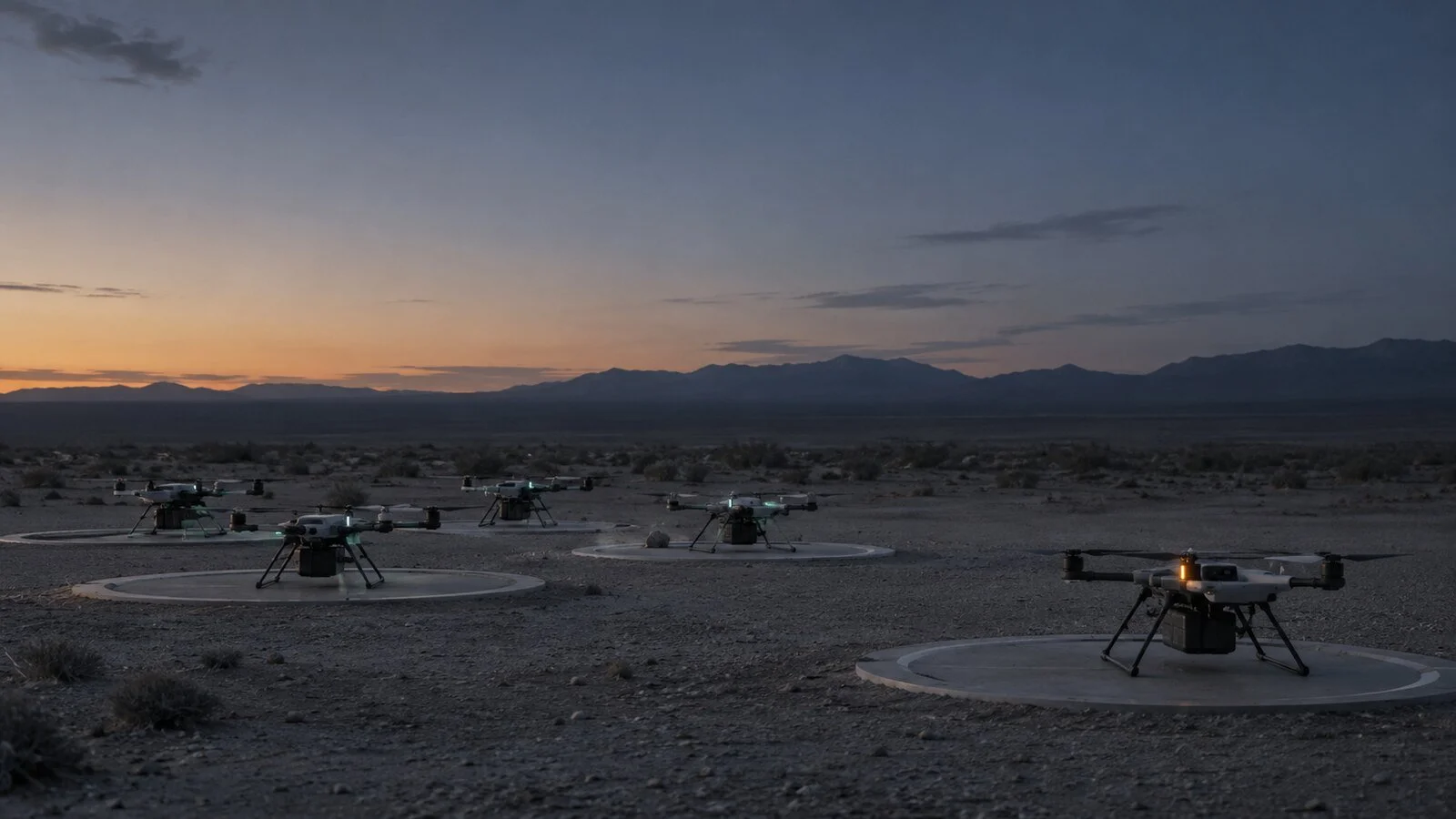
Autonomous drone swarm assurance
Does a fictional non-weaponized formation have a reviewable receipt record?
A controlled training or civilian infrastructure-inspection scenario checks every aircraft’s identity and configuration before a qualified person reviews the record. This is an illustrative evidence-readiness scenario—not operational assurance or certification.
- Claim: The non-weaponized formation is ready for qualified review.
- Source and time: Authorized fictional mission purpose and preflight receipts.
- Version or configuration: Swarm membership, aircraft firmware and payload state.
- Operating conditions: Communications, navigation, weather and site limitations.
- Open gap: One aircraft reports a configuration discrepancy.
- Human review: Qualified personnel review the flagged record; all operational decisions occur outside TTC.
- Next action: Flag the affected aircraft’s receipt, preserve the discrepancy and refer the record to authorized personnel.
Boundary: TTC does not command, control, classify or select an operational response. All operational decisions occur outside TTC.
 Illustrative receipt pattern
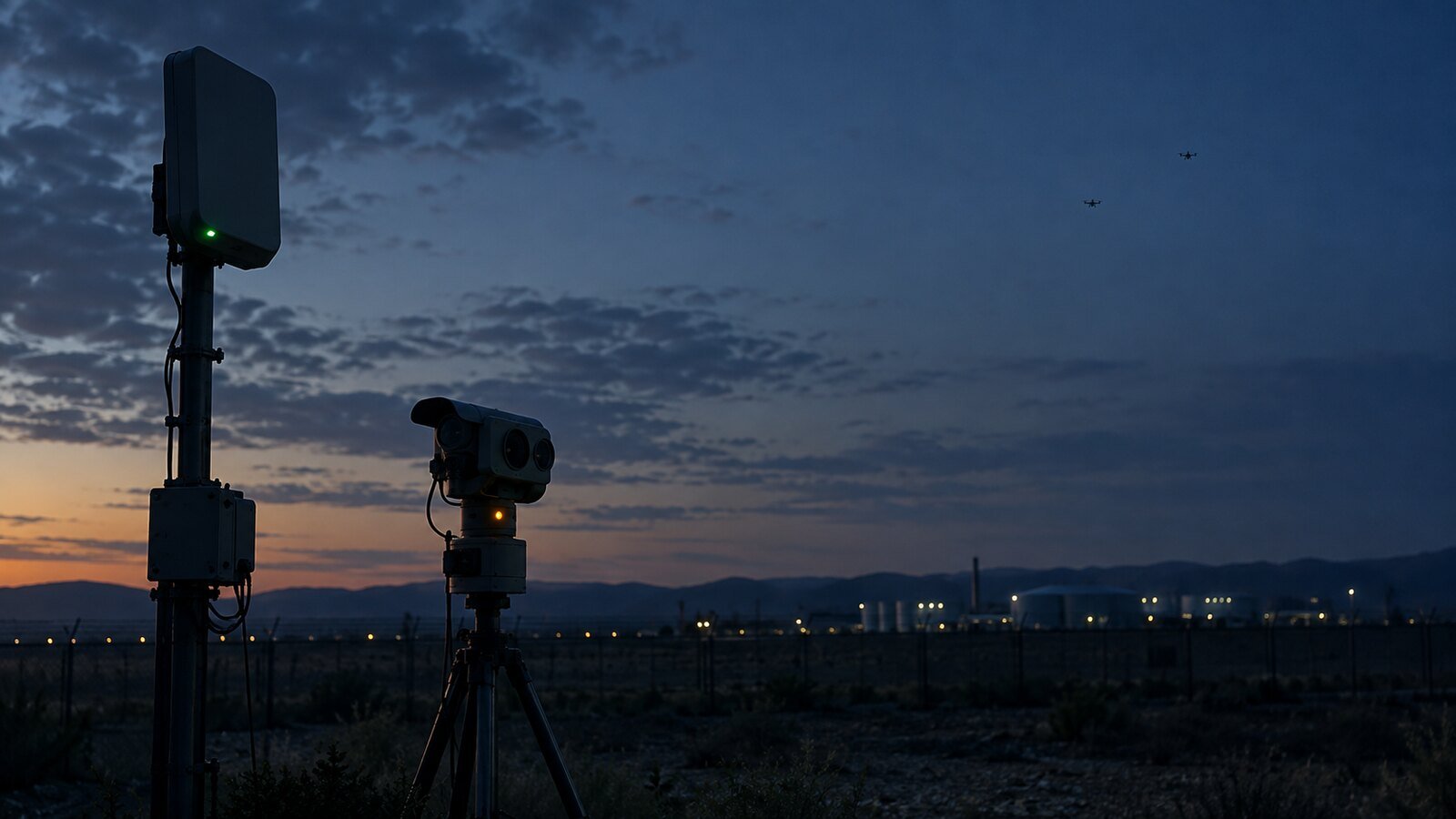
Counter-drone decision receipt
Does a fictional tabletop alert have enough receipts for qualified human review?
A fictional counter-UAS tabletop alert near generic protected infrastructure is reviewed for record provenance, corroboration, configuration, uncertainty, separately applicable policy and human action. TTC neither classifies the alert nor selects an operational response.
- Claim: The tabletop alert record warrants qualified review.
- Source and time: Alert receipt, timestamp and sensor origin.
- Version or configuration: Sensor identity, software and calibration state.
- Operating conditions: Fictional conditions, generic protected-infrastructure setting and approved tabletop boundary.
- Open gap: A timing difference between the alert record and corroborating observation remains unresolved.
- Human review: Authorized qualified personnel interpret the record and separately applicable policy.
- Next action: Preserve the unresolved alert for authorized review; no operational response is selected here.
Boundary: TTC does not command, control, classify or select an operational response.
Fictional example
Receipt Flight Recorder
Choose a world to begin.
Claim
The consequential claim is made specific.
Switch one fact
Remove or change one fictional receipt. The affected downstream stages stay visible as unresolved—not automatically false.
Receipt Blueprint
Fictional consumer decision
What supports the claim
What conflicts
What remains unresolved
Qualified human review
Next safer action
These fictional examples accept no files or case information. Selections stay in this tab and are not transmitted or persistently stored by this interaction. Copy and Print act only when you choose them. The site platform may operate its separately disclosed services.
Keep a reusable record of your reasoning
Seven details to keep with the claim
- Claim
- Source and time
- Version or configuration
- Operating conditions
- Conflict or open gap
- Human review
- Next action
A reusable approach
Keep the claim and its receipts together.
Keep a clear record of what supports the claim, what conflicts, and what remains unresolved. That makes the question easier to revisit when new information arrives.
- Capture one specific claim.State exactly what you may rely on.
- Preserve the receipts.Keep the source, origin, date, and reviewed passage connected.
- Connect claim to source.Show support, conflict, and unresolved states.
- See the evidence gap.Keep the missing receipt visible.
- Choose the next step.Preserve, verify, seek human review, prepare a private packet, or do not rely yet.
Integrity is useful—but it is not truth. A cryptographic file hash can help identify whether the same bytes were compared. It does not prove authenticity, authorship, completeness, or truth.
Explore review-time assumptions with the planning calculator
Receipt Economics Explorer
How much review time do your assumptions represent?
Explore the time involved in locating, reconciling, and reviewing records. Enter aggregate assumptions to calculate a planning model. The results do not measure TTC performance.
Modeled evidence-review labor (person-hours) = number of decision reviews × average active participants per review × average evidence-review minutes per participant per review ÷ 60
Modeled labor-capacity cost equivalent = modeled person-hours × user-entered average labor-cost rate per person-hour
Hypothetical modeled reduction amount = modeled labor-capacity cost equivalent × (user-selected reduction percentage ÷ 100)
Modeled remaining amount = modeled labor-capacity cost equivalent × [1 − (user-selected reduction percentage ÷ 100)]
Fictional arithmetic illustration: 10 decision reviews × an average of 2 active participants per review × an average of 15 evidence-review minutes per participant per review ÷ 60 = 5 person-hours. These fictional inputs demonstrate the arithmetic only. They are not measured, benchmarked, expected or typical results and do not demonstrate time or money saved by The Truth Calculator.
Enter finite, nonnegative values within the stated ranges and select a period.
Modeled result from your assumptions
- Modeled evidence-review labor (person-hours)
- Modeled labor-capacity cost equivalent
- Hypothetical modeled reduction amount
- Modeled remaining amount
Exclusions: implementation effort, workflow differences, quality, risk, delay and other costs. Open gaps: no baseline study, measured reduction, sample size or validated TTC outcome has been supplied.
Planning model only. Results are calculated solely from assumptions you enter. They are not measurements, forecasts, benchmarks, typical results or claims of TTC-caused savings. Dollar results represent a modeled labor-capacity equivalent—not cash savings, avoided expense, revenue, profit or ROI. The model excludes implementation effort, workflow differences, quality, risk, delay and other costs.
See how the planned ecosystem fits together
The developing ecosystem
Start with one claim. Explore depth as you need it.
The free experience is the starting point. Deeper investigation and specialist workflows remain planned and are not currently available or purchasable. Follow verified release updates for confirmed scope and availability.
One consequential claim
Connect one claim with its supporting records, conflicts, open gaps, human review and next action. See the current Free App page for verified release status.
Forensic Investigation
A planned deeper, multi-event investigation workspace. It is not currently represented here as available, released or purchasable.
Mission Evidence and Machine Evidence
Specialist concepts for recurring, more complex evidence workflows. Working names, scope, timing, availability, and pricing remain subject to confirmation.
Trust boundary
Receipts support judgment. They do not replace it.
Evidence readiness
The Truth Calculator supports evidence readiness and qualified human review. It does not determine absolute truth, guilt, fraud, legality, liability, compliance, certification, operational readiness, safety or professional outcomes.
Mars and autonomous systems
The Truth Calculator and qX‑TGRI do not command robots, choose routes, modify autonomy, initiate missions or certify mission safety.
Defense examples
The Truth Calculator and qX‑TGRI do not detect, classify, track, command, target, jam, intercept, neutralize or control drones. Every defense example is fictional, non-operational and non-sensitive.
qX‑TGRI boundary
qX‑TGRI is local/offline and mission-record focused unless separately approved. It provides no drone control, live production integration, autonomy modification, operational safety certification or FAA compliance certification.
Before you rely
A better next question starts with the record.
Explore the free experience, or receive verified release updates as the app and its ecosystem become available.
Read the experience limits and data handling
Fictional examples only. This experience does not determine truth, deception, guilt, fraud, liability, probable cause, legal merit, compliance, safety, certification, professional judgment or an outcome—and it does not replace qualified professionals. This page interaction accepts no files or descriptive case information and sends or retains none of its session-local interaction inputs, except when the visitor explicitly chooses Copy or Print. The site platform may operate its separately disclosed site-level services.