
Authority & Mission Evidence
Planned capability · Scoped evaluation inquiries
Can your mission evidence survive the handoff?
A mission can end in minutes. The questions about authority, sources, permitted use and human decisions can remain for years.
When those records live in separate systems, the next reviewer may inherit a conclusion without the complete decision path. Authority & Mission Evidence is a planned Truth Calculator capability designed to help authorized teams keep that path connected, inspectable and appropriately bounded through the handoff.
The operation ends. Accountability does not.
- ClaimWhat is being asserted?
- SourceWhat reviewed material supports or challenges it?
- Authority to useWhat documented basis and restrictions apply?
- Open gapWhat remains missing, stale or conflicting?
- Human reviewWho reviews the exact record?
- Next actionWhat bounded review step remains?
Designed to support the record - not make the decision.
“Me” refers to Jay Allan Shears. The link opens the existing public BEYONDx Advisors contact page; form delivery and mailbox routing have not been independently tested. Pricing inquiries concern a planned, scoped evaluation pathway. They do not indicate general availability, operational deployment, procurement eligibility, legal sufficiency, compliance, agency approval or authorization for a controlled data environment.
Role Lens
See the handoff through your role.
The same mission record creates different questions for leadership, legal reviewers, program teams, evidence custodians and technical integrators.
Your selection changes the emphasis only. It does not determine legal authority, product suitability, procurement eligibility, organizational readiness or operational risk.
Review all prepared role-lens outcomes
Choose a professional perspective
Select a role to place its accountability question in focus. All perspectives remain part of the record.
Command or executive leadership
Can I explain what was known, what remained open and who accepted responsibility for the next step?
Bring the decision path, material gaps, review ownership and limits of the conclusion into one inspectable view.
Question to carry forward: Could the next executive reconstruct this decision without relying on a verbal briefing?
Does not certify mission success, compliance, safety, readiness or legal sufficiency.
Legal, policy or privacy
Does the record show both the source and the documented basis for this specific use?
Keep source authority, purpose, permitted-use constraints, open questions, retention instructions and appropriate human disposition beside the evidence.
Question to carry forward: If the purpose changes, does the record show whether the source may still be used?
Does not provide legal advice, determine applicability, create authority, approve a use or replace counsel.
Program or acquisition management
Can I distinguish a documented requirement from a demonstrated capability and a future proposal?
Expose requirements provenance, current versus planned capability, unresolved dependencies and evidence still needed for review.
Question to carry forward: Would an evaluator know which claims have been demonstrated and which remain design intent?
Does not establish acquisition suitability, contract compliance, deployment readiness or acceptance.
Mission, evidence or supervisory review
Can another qualified reviewer follow what happened to the record after the event ended?
Keep claim, source and version identity, conflicts, review role, disposition instruction and next bounded review step connected.
Question to carry forward: Does the package preserve uncertainty as carefully as it preserves the conclusion?
Does not authenticate evidence, determine a threat, approve enforcement action or direct an operational response.
Technical integration or security
Can the proposed integration preserve provenance and policy boundaries without overstating its data-environment readiness?
Make interface provenance, versions, system boundaries, data tier and unresolved security gates inspectable.
Question to carry forward: Can the integration preserve the evidence boundary without importing unsupported authority or assurance claims?
Not represented as approved for classified information, CUI, FCI, CJIS information, FedRAMP, FIPS, ITAR, EAR or another controlled environment.
Handoff Failure Patterns
The record usually breaks at the seams.
A polished after-action summary can be accurate in part and still leave its basis difficult to inspect.
These breaks do not prove that a mission conclusion is wrong. They show where reliance needs more documentation.

Review all prepared record-break outcomes
Choose a seam to inspect
This is an educational model, not a compliance or operational assessment.
The source is present. Its authority is not.
A document appears in the package, but the record does not identify who supplied it, how it entered the review or the documented basis for considering it.
Why it matters: Availability is not provenance, and possession does not establish permission.
Next review: The appropriate evidence, legal, policy or supervisory role must establish and record the missing basis.
The authority is recorded. The permitted purpose is not.
The source has a recorded origin, but the package does not show whether it may be reviewed, reused, retained or disclosed for the purpose now proposed.
Why it matters: Authority for one activity does not automatically establish permission for another.
Next review: The appropriate legal, policy, privacy or data-steward role must determine and document the permitted use.
The evidence is present. Its operating context is not.
The record does not establish when the source was created, which version was reviewed or whether it corresponds to the relevant plan, policy or configuration.
Why it matters: A correct record from the wrong time or configuration may not answer the question under review.
Next review: Reconcile the time basis, revision and relevant configuration.
The conclusion is preserved. The contradiction is not.
A conflicting timestamp or reviewer note disappears into summary language, making the narrative appear more certain than the reviewed record supports.
Why it matters: A visible conflict does not prove either source false. It preserves the question another reviewer must resolve.
Next review: Restore the conflict and preserve its resolution or open status.
The action is recorded. The responsible review is not.
The package shows that a disposition occurred but does not identify the qualified role, exact record version, scope, conditions or rationale.
Why it matters: A system event is not a substitute for accountable human judgment.
Next review: An authorized human must review and document the record.
The event is closed. The record obligation is not.
The package does not identify what must be preserved, transferred, access-restricted or disposed of under the applicable instruction.
Why it matters: Mission closure does not automatically resolve record-handling obligations.
Next review: The appropriate records, legal, policy or supervisory authority must establish the controlling instruction.
A clean file is not the same as a complete basis for reliance.
Fictional Training Scenario
Would the record hold together for the next reviewer?
Remove one element from a synthetic mission record and inspect what changes.
During a fictional tabletop exercise associated with an unoccupied public-safety training range, a review team examines a synthetic observer log, a training-control event log, a source-authority note and a retention instruction concerning a generic, non-weaponized quadcopter.
The exercise contains no live detection, tracking, threat determination, mitigation, interception, flight control or enforcement activity. All organizations, identifiers, times, records and events are invented.
Claim under review
A generic quadcopter was recorded within the exercise review area during the simulated event window.
- Synthetic observer log, revision 2
- Synthetic training-control event log, revision 1
- Source-authority record
- Permitted-use limitation
- Date and revision context
- Two-minute timestamp conflict
- Designated human-review role
- Retention and disposition instruction
Review all handoff stress-test outcomes
The complete illustrative record is present.
The package is easier to inspect. That does not establish legal sufficiency, compliance, evidence authenticity, safety, mission approval or operational readiness.
The source remains. Its documented basis does not.
The package no longer records who issued or controlled the source, how it entered review or why it may be considered.
Next review: Confirm origin, custodian and authority basis through the appropriate role. The planned capability cannot create missing authority.
The source is available. This purpose remains open.
The package no longer records whether the material may be used for this after-action process review.
Next review: Record the purpose, actor, recipient category, policy, permitted actions and conditions through the appropriate authorized role. The page does not determine legality.
The material remains. Its context is unclear.
The relationship to the simulated event, relevant plan and reviewed configuration cannot be determined from the remaining record.
Next review: Reconcile time basis, revision and configuration. Context supports traceability; it does not authenticate evidence.
The summary now appears more certain than its sources allow.
The observer log records 14:32. The training-control event log records 14:34. Removing that difference conceals an open time-basis question.
Next review: Restore the conflict and document its resolution or continuing open status. A conflict does not prove either source false.
The evidence review may end. Its next custody state is undefined.
The package no longer identifies which instruction governs preservation, access, transfer or disposition.
Next review: Refer the record to the appropriate records, legal, policy or supervisory authority. TTC does not set or certify a retention schedule.
The sources remain. Accountable reliance does not.
The package no longer identifies the qualified role that reviewed the record or accepted responsibility for the next decision.
Next review: A qualified, authorized person must review the evidence and record the disposition. The planned capability does not replace that reviewer.
This test produces no score, legal conclusion, operational recommendation or readiness determination.
Separate Questions
No single green light
A source can support a claim without establishing authority to use it. Authority can be documented without resolving the evidence. A human decision can be recorded without making the underlying source complete.
Three records. Three questions. No automatic approval.
A selected control means only that the corresponding record is present in this synthetic example. It does not mean the conclusion is correct, sufficient, compliant or approved.
Review all eight record-state combinations
Three questions remain open
The record does not document source support, authority and permitted use, or accountable human review. No reliance posture can be inferred.
Evidence-only posture
Source support is documented. Authority and permitted use remain open, and no qualified human decision is recorded. Evidence support is not authorization.
Authority-only posture
Authority and permitted-use review are documented. Source support remains unestablished, and no qualified human decision is recorded. Authority does not supply missing evidence.
Decision-only posture
A qualified human decision is recorded. Source support and authority review remain open. A recorded decision does not cure an incomplete evidence or authority record.
Human decision still required
Source support and authority review are documented. The package still lacks an accountable human disposition. Two completed records do not create the third.
Permitted-use review still required
Source support and a human decision are documented. Authority and permitted use remain open. Human review cannot create authority the record does not establish.
Source support still required
Authority review and a human decision are documented. Source support remains open. Authorization and responsibility do not prove the claim.
Three records present for review
All three records are documented in this fictional example. Their presence makes the package more inspectable. It is not a determination of legal sufficiency, compliance, safety, readiness, authenticity or mission approval.
Record presence is not a verdict.
Planned Artifact
Illustrative planned output — not an agency record
A mission receipt should show its work - and its limits.
A proposed Mission Evidence Receipt would organize the records another qualified person needs to inspect. It would not declare that an operation was lawful, successful or safe.
This example uses fictional Exercise Harbor Lantern 24-17. Every value is synthetic.
Review all mission-receipt fields
Claim
Synthetic example: During fictional Exercise Harbor Lantern 24-17, a generic non-weaponized quadcopter was recorded within the exercise review area during the simulated event window.
A bounded claim gives reviewers something specific to support, challenge or leave unresolved.
Recording a claim does not make it true or determine threat, guilt, fraud, legal sufficiency or operational significance.
Reviewed source
Synthetic example: Observer log EX-OBS-017, revision 2; training-control event log EX-CTL-004, revision 1.
Exact source identity reduces reliance on an unattributed summary.
Listing a source does not authenticate it or establish completeness.
Source authority
Synthetic example: Both records were issued by the exercise controller under the fictional training plan for after-action process review.
The field distinguishes possession from a documented basis for consideration.
The receipt cannot create authority or resolve a question that remains open.
Permitted use
Synthetic example: Training evaluation and process-design review only. No operational, enforcement, public-release or model-training use.
A source available for one purpose may not be permitted for another.
The software does not make the legal or policy determination.
Date, version and configuration
Synthetic example: Scenario package 0.3; simulated event window 14:30-14:40 local; exact source revisions listed above.
Context connects the reviewed source to the relevant time and version.
Recorded context improves traceability; it does not authenticate the source.
Conflict or open gap
Synthetic example: The observer log records 14:32. The training-control event log records 14:34. The time-basis difference remains unresolved.
Visible conflicts keep the narrative from becoming more certain than its record.
A visible conflict does not prove either source false.
Reviewing role
Synthetic example: Designated role: supervisory evidence reviewer. No approval status is inferred.
The field shows where accountable human judgment belongs.
A role label is not proof that review occurred.
Retention or disposition note
Synthetic example: Apply the controlling exercise-record instruction. Duration and final disposition are not asserted here.
The field keeps future handling visible after review.
TTC does not establish or certify a retention schedule.
Next authorized review action
Synthetic example: Reconcile the two time bases, record whether the difference changes the after-action narrative, and refer any authority question to the appropriate reviewer.
This separates an evidence-review task from an operational instruction.
Not automated tasking, legal advice or a mission-action recommendation.
Joint Part 124 Lens
A narrow authority deserves a precise record.
The parallel DOJ and DHS rules in 28 CFR Part 124 and 6 CFR Part 124 implement 6 U.S.C. §124n(a)(2) for specified state, local, Tribal and territorial law-enforcement and correctional agencies and authorized personnel.
This narrow lens does not address Federal operations under §124n(a)(1), does not govern every public-safety, defense, aerospace or counter-UAS activity, and does not transfer or displace Department of Transportation or Federal Aviation Administration authority.
The September 7, 2026 static assessment found substantial requirements-level alignment with selected evidence-governance obligations in the materials reviewed. Eight clarification or extension groups remain before a future controlled A2/Tier C counter-UAS profile could be considered.
Closing G1-G8 alone would not establish release, approval, compliance or deployment readiness. Customer, data-tier, jurisdiction, application, engine, SDK, adapter and policy gates—and a current-source recheck—would still remain.
No executable software, integrated vendor application, live agency deployment, controlled-environment approval or data-tier approval was tested or established.
Source authority and permitted use
Proposed design direction: Record the acquiring actor, acquisition method, asserted authority, scope, purpose, policy version, restrictions and appropriate review.
Boundary: The product may document those matters. It cannot confer authority or substitute for counsel.
Retention, disposition and audit
Proposed design direction: Keep content-retention duties separate from protected audit records, bind clocks and exceptions to documented events, and expose unresolved copies.
Boundary: No universal deletion rule, purge guarantee beyond verified system control or legal-hold determination is provided.
Policy and reporting
Proposed design direction: Map policy, reviewer, version, attestation and post-operation reporting fields while keeping created, approved, dispatched and acknowledged states separate.
Boundary: No legal-deadline calculation, official government form, portal filing or agency attestation is provided.
Disclosure and data handling
Proposed design direction: Record purpose, recipient category, basis, caveats, sensitivity markings, exact output version and human approval.
Boundary: "Local," "metadata-only," "redacted" or "customer-owned" does not itself establish permission or classification.
Eight open closure groups
G1
Source-authority prohibition and appropriate counsel concurrence.
G2
Constitutional-purpose controls.
G3
Policy and reporting records.
G4
Retention and review clocks.
G5
Protected audit-system separation.
G6
Disclosure and pattern-data controls.
G7
Enforceable sensitivity markings.
G8
SDK secondary-use and vendor-access boundaries.
G1-G8 are proposed requirements-closure groups for a future controlled A2/Tier C counter-UAS profile. Closing them would be necessary but not sufficient for any release or deployment; the additional customer, data-tier, jurisdiction, application, engine, SDK, adapter and policy gates—and a current-source recheck—would still apply. They are not failures of the current public-facing TTC experience.
Informational requirements context only - not legal advice. Applicability, agency policy, counsel review and official reporting remain with the authorized organization and relevant government channels.
Planned Outputs
Inspect the planned record - not a promise.
Each illustrative artifact makes a different accountability question easier to inspect. None is an implemented government form, submitted report, authorization or certification.
Review all seven illustrative planned outputs
Illustrative planned output — not an agency record
Authority Source Register
Records who supplied or acquired each source, by what method, under what asserted authority and scope, with supporting references, review status, conditions, expiry and gaps.
Documents the basis presented for review. It does not issue permission or authenticate a source.
Illustrative planned output — not an agency record
Permitted-Use Review
Records the proposed purpose, actor, recipient category, permitted actions, policy version, conditions and unresolved limits.
Exposes the purpose-specific question. It does not decide legality.
Illustrative planned output — not an agency record
Mission Evidence Receipt
Connects a bounded claim with reviewed source anchors, support state, authority-review state, open gap, reviewing role and next bounded review action.
Means completed-record reviewability, not flight, threat, safety or mitigation clearance.
Illustrative planned output — not an agency record
Retention and Disposition Record
Identifies the relevant object or derivative, applicable instruction, review date, exception basis, systems in scope, disposition result and unresolved copies.
Cannot guarantee deletion beyond verified system control or establish the governing legal schedule.
Illustrative planned output — not an agency record
Conflict and Open-Gap Register
Preserves contradictory or absent records, affected claims, responsible review role and next evidence-review task.
Conflicts remain visible; they are not averaged away or converted into a score.
Illustrative planned output — not an agency record
Human Review Record
Records the reviewing role, exact version and scope examined, disposition, conditions, time and expiry or signature method when available.
A role label is not proof that an authorized review occurred.
Illustrative planned output — not an agency record
Controlled Audit Export
Prepares selected audit events, version references, policy references, disclosure status and a bounded manifest for authorized review.
Not an official government submission, portal filing or universal audit record.
Mission Lanes
The mission changes. The accountability pattern holds.
Choose a fictional lane to see how the same evidence-readiness pattern could frame a different handoff.
These are planned, non-operational journeys - not deployed workflows or automated recommendations.

Review all five mission lanes
Choose a planned evidence journey
The lane changes the example, not the product status or decision authority.
Public-safety mission governance
Question: Can a completed exercise or response record show which source, plan, version and reviewer support each handoff statement?
Path: Completed record → Scope → Reviewed sources → Open gaps → Supervisory review → Bounded receipt.
No dispatch, incident command, safety determination or operational direction.
Specified law-enforcement or corrections authority review
Question: Can the organization distinguish source authority, purpose, review and disposition before relying on or sharing a record?
Path: Applicability context → Source authority → Permitted use → Required review → Retention or disposition → Controlled handoff.
No authority grant, counsel substitute, certification, deadline advice or portal filing.
Defense or civil-security program evidence
Question: Can program leadership separate supplier assertion, reviewed evidence, configuration, exception and human disposition?
Path: Requirement → Supplier assertion → Reviewed source → Configuration and exception → Human disposition → Receipt.
No classified or CUI processing, weapon integration, targeting, operational-autonomy decision or readiness certification.
Counter-UAS after-action evidence review
Question: After a completed synthetic exercise, can the team explain what the record supports, the documented basis for using it and what remains unresolved?
Path: Completed exercise record → Source and provenance → Authority context → Conflict or gap → Human review → After-action receipt.
No live feed, communications interception, detection, tracking, threat determination, countermeasure recommendation, jamming, interception or aircraft control.
Technical integration or SDK evaluation
Question: Can an application preserve claims, sources, restrictions and review through a proposed versioned contract without exposing protected engine internals?
Path: Synthetic sandbox → Explicit field mapping → Proposed engine boundary → Conformance checks → Human-reviewed receipt.
The engine, SDK, API, portal and production rights are proposed. No current availability or redistribution right is implied.
Data-Admission Boundary
Start with the data boundary - not the upload.
Different information environments require different legal, security, records and deployment controls.
Selecting a tier here is educational only. It does not authorize data, create an environment or change product access.
Review all three data-tier boundaries
Tier D - Demonstration
Use predetermined fictional records to inspect the proposed workflow without customer operational content. This educational experience uses synthetic examples only.
Do not submit real evidence, agency records, mission information or customer data.
Tier N - Scoped non-restricted review
A separately agreed evaluation could consider authorized, non-sensitive records after purpose, rights, scope and handling are documented.
Tier N is not automatically available through this page and does not permit restricted, controlled or operational content.
Tier C - Controlled organizational environment
A controlled environment would require customer-specific legal, security, identity, classification, records, infrastructure, deployment and operational approval before regulated records could be admitted.
A2/Tier C remains unapproved. It is not a consumer toggle. Classified processing is not authorized.
Proposed Platform Pathway
From first-party receipt to a governed application pathway.
The Truth Calculator is the first-party evidence-readiness experience. A separate qX-TGRI roadmap proposes a protected, versioned engine boundary and deliberately licensed SDK.
No SDK, API, developer portal, production runtime or redistribution right is represented as currently available.
Review the complete proposed engine and SDK pathway
1. The Truth Calculator
The current public-facing TTC experience centers on claims, reviewed sources, open gaps and human review.
This describes the public-facing experience, not a live-binary verification, and does not establish controlled-agency handling.
2. Specialized review need
Identify a bounded organizational handoff where source authority, permitted use, version, conflict and human disposition need a clearer record.
Need recognition is not a suitability, procurement or compliance determination.
3. Authority & Mission Evidence
Explore a proposed dossier, authority-review record, open-gap workflow and controlled receipt using synthetic or separately approved non-sensitive information.
No general availability, controlled-data approval or production right.
4. qX-TGRI engine boundary
A protected, versioned runtime boundary is proposed to normalize supported records, preserve shared state meanings and produce versioned evidence-readiness results.
Not a truth oracle, safety controller, authority issuer or operational counter-UAS system.
5. Vendor SDK and synthetic sandbox
Planned contracts, documentation, wrappers, examples, synthetic fixtures and conformance tools could support qualified developer evaluation.
No current SDK, public API, portal, released wrapper or source-code right.
6. Domain pack and vendor application
A vendor-owned application could use an approved domain extension under explicit field-of-use, deployment, security and runtime rights.
SDK conformance would not mean government approval, qX certification, sector compliance or engine redistribution permission.
One governed evidence boundary. Separate approval for every application, data tier and deployment.
Evidence Path Boundary
Public-facing experience. Planned capability. Proposed platform.
- Current public-facing TTC experience
- Evidence-readiness presentation centered on claims, reviewed sources, visible gaps and human review. The supporting MRDs did not inspect a live binary.
- Planned Authority & Mission Evidence
- A scoped evaluation pathway, not a generally available product, agency deployment or controlled-data approval.
- Proposed qX-TGRI engine and SDK
- Roadmap concepts only. No current SDK, API, developer portal, production runtime or redistribution right is represented.
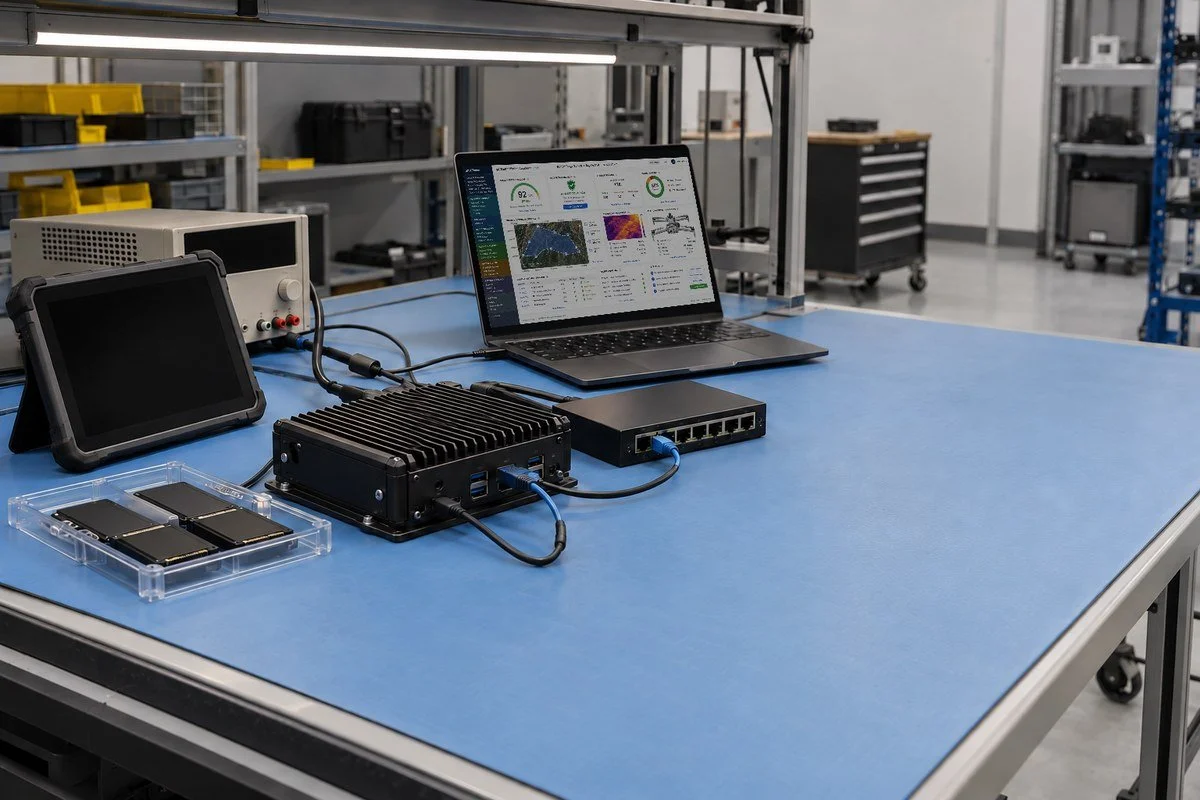
The laptop shows a user-authorized concept interface using fictional presentation data; it is not evidence of production capability.
Discuss a bounded pathway
Begin with the application category, organization, preferred deployment model and approximate scale—not a protected record or technical configuration.
“Me” refers to Jay Allan Shears. The link opens the existing public BEYONDx Advisors contact page; form delivery and mailbox routing have not been independently tested. Availability, developer access, integration scope and production rights remain subject to review and written agreement.
Mission Evidence Watch
See what is current, planned, pending - and outside scope.
Last reviewed: September 7, 2026
This is a manually reviewed status ledger. Its date changes only when an underlying source, capability or release gate is reviewed. It is not a countdown or release promise.
Review the complete capability-status ledger
Current public-facing TTC experience
The current public-facing Truth Calculator experience is receipt-focused, conservative and centered on reviewed sources, visible gaps and human review.
The MRDs supporting this page did not inspect a live binary and do not establish additional Authority & Mission Evidence software capability.
Authority & Mission Evidence
A proposed organizational review workspace for source authority, permitted use, version context, open gaps, human disposition, retention or disposition and bounded receipts.
No release date, production deployment or controlled-data approval is established.
qX-TGRI engine and SDK
A protected runtime boundary, vendor SDK, synthetic sandbox, conformance tooling and reusable domain packs are proposed.
No current SDK, API, developer portal, released wrapper, production license, vendor adoption or redistribution right is established.
Requirements pending clarification
- Source-authority hard stop and appropriate counsel concurrence
- Constitutional-purpose controls
- Policy and reporting records
- Retention and review clocks
- Protected audit-system separation
- Disclosure and pattern-data controls
- Enforceable sensitivity markings
- SDK secondary-use and vendor-access boundaries
These groups concern a future controlled A2/Tier C counter-UAS profile. Closing them alone would not establish release or deployment; customer, data-tier, jurisdiction, application, engine, SDK, adapter and policy gates—and a current-source recheck—would still remain. They are not failures of the current public-facing TTC experience.
Explicitly outside scope
- Live detection or surveillance feed
- Communications interception
- Threat or credible-threat determination
- Aircraft tracking
- Jamming, spoofing, targeting, interception or mitigation
- Flight command or autonomy modification
- Operational safety decision
- Legal authority, certification or compliance determination
- Government portal filing
- Classified processing
Return to this ledger for dated changes in scope, supporting evidence and release gates - not marketing countdowns.
Bounded First Conversation
Know what happens before you contact us.
The public contact route is a business-inquiry channel, not a protected evidence portal. Begin with the workflow and the handoff - not the underlying record.
- Choose the subject of the conversation.
- Follow the existing public BEYONDx Advisors contact page.
- Share only basic, non-confidential business context.
- Discuss the proposed scope, data tier, deployment and evaluation needs.
- Decide whether a separately documented next step makes sense.
No response time, evaluation, demonstration, procurement outcome, specific representative or confidentiality treatment is promised.
Review all six contact-path guidance views
Choose a conversation path
Your choice changes only the guidance on this page. It does not create an assessment or attach information to the contact link.
Authority and mission-evidence evaluation
Share: Organization type, broad workflow, desired evidence handoff and approximate non-sensitive scale.
Do not share: Records, names, case facts, source files, hashes or protected data.
Public-safety or law-enforcement requirements discussion
Share: General organization category, your professional role and a broad governance or evidence-readiness question.
Do not share: Incident details, intercepted communications, exact locations, investigative records, identities or law-enforcement-sensitive information.
Defense or civil-security evidence workflow
Share: General program category, handoff stage, anticipated data category and preferred deployment model.
Do not share: Classified information, CUI, FCI, export-controlled content, system configurations, vulnerabilities or mission data.
Counter-UAS after-action evidence review
Share: A general description of the completed-record governance problem and the roles involved in the handoff.
Do not share: Communications, frequencies, sensor configurations, locations, tactics, threat details, response procedures or operational records.
Engine or SDK planning discussion
Share: Application category, intended deployment model, approximate scale and broad integration objective.
Do not share: Source code, credentials, protected schemas, customer records or restricted technical data.
General business question
Share: A concise, non-confidential description of the business topic.
Do not share: Evidence files or protected information.
Page-local selector privacy: This selector personalizes only the guidance shown here. Your choice is not stored, transmitted, added to the URL or passed to the contact destination.
“Me” refers to Jay Allan Shears. The link opens the existing public BEYONDx Advisors contact page; form delivery and mailbox routing have not been independently tested. Pricing inquiries concern a planned, scoped evaluation pathway. They do not indicate general availability, procurement eligibility, operational deployment, SDK access or a compliance determination.
Mission-Fit Invitation
Planned / scoped evaluation inquiries
Bring the question. Leave the protected record where it belongs.
If your organization needs to explain what a completed record supports, the documented basis for using it, what remains open and who must review it, a scoped conversation may be the responsible first step.
Start with your organization type, the handoff you want to improve, the broad data tier you anticipate and the approximate scale. Do not send the evidence itself.
“Me” refers to Jay Allan Shears. The link opens the existing public BEYONDx Advisors contact page; form delivery and mailbox routing have not been independently tested. A pricing conversation does not establish product availability, evaluation acceptance, deployment rights, legal authority, compliance or access to a controlled environment.
Authority & Mission Evidence does not confer counter-UAS authority, certify legal compliance, authenticate evidence or replace agency counsel, records officials, supervisory reviewers or required government submissions.
The operation ends. Accountability does not.